Panthenol Skincare: What Vitamin B5 Really Does, and Is It Safe?
Panthenol skincare is one of those topics I kept running into without ever stopping to look at it. It was in last week’s trend data, in two 5,000 won creams at Daiso, and in a French balm that Korean YouTubers keep debating. So this time I went to the source. I read Korea’s ingredient data, checked the EU database and opened six papers.
Short answer: panthenol is a well-studied, gentle moisturizing ingredient. However, most of the clinical work is on medical-style ointments, and the biggest rule difference I found is in Japan, not Korea.
What panthenol is
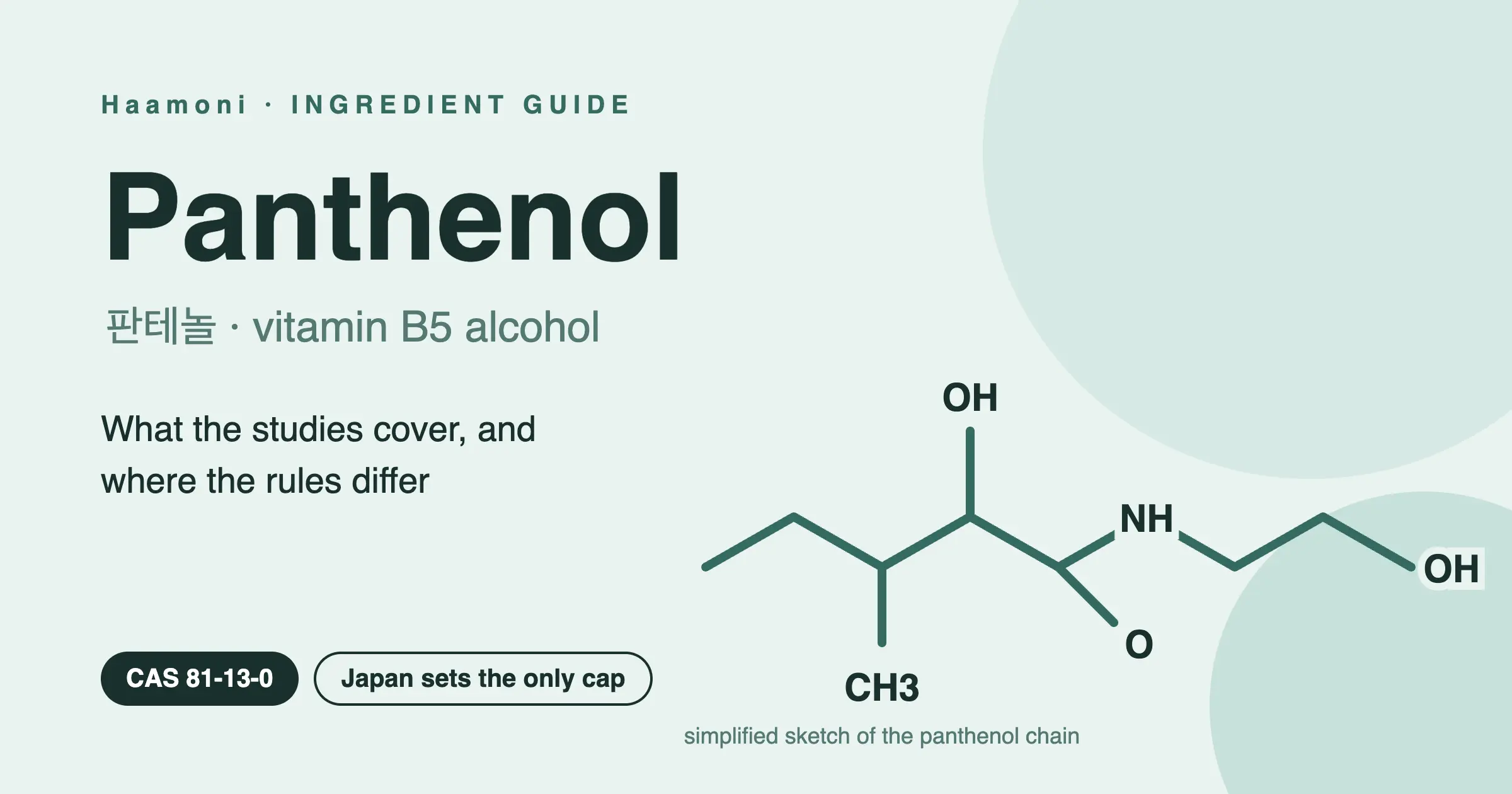
Panthenol (판테놀) is the alcohol form of pantothenic acid, better known as vitamin B5. It is also called provitamin B5. Your skin can convert it to pantothenic acid, which the body uses to make a helper molecule called coenzyme A.
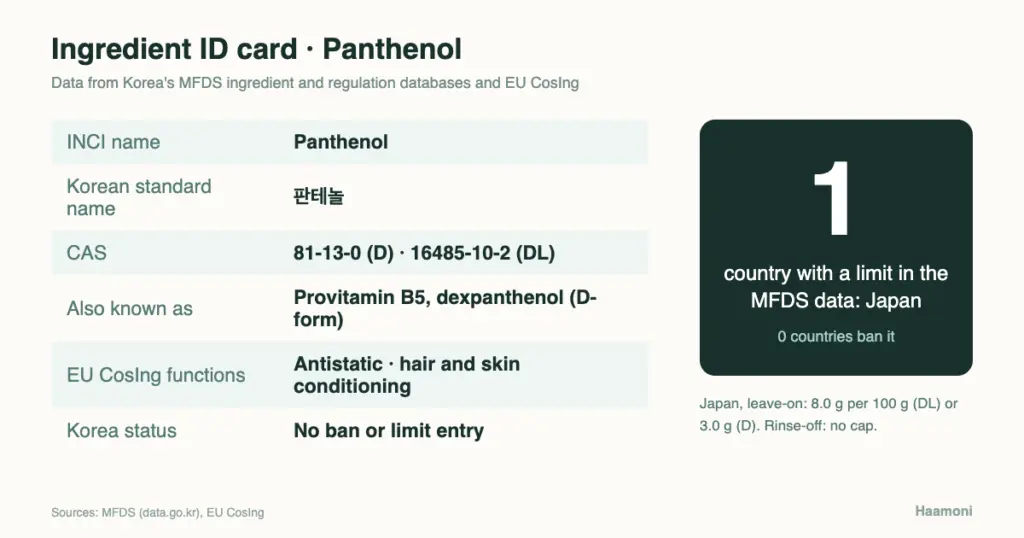
Korea’s MFDS ingredient database lists the standard name 판테놀 with the English (INCI) name Panthenol. The same database has seven panthenol-related entries in total. Some are derivatives, such as Allantoin Panthenol, so a search can return more than the plain ingredient.
The restricted-ingredient record gives two CAS numbers, 81-13-0 for the D-form (dexpanthenol) and 16485-10-2 for the mixed DL-form. The EU’s CosIng database shows the same two numbers. It files panthenol under three functions: antistatic, hair conditioning and skin conditioning.
Why Korea is searching for panthenol now
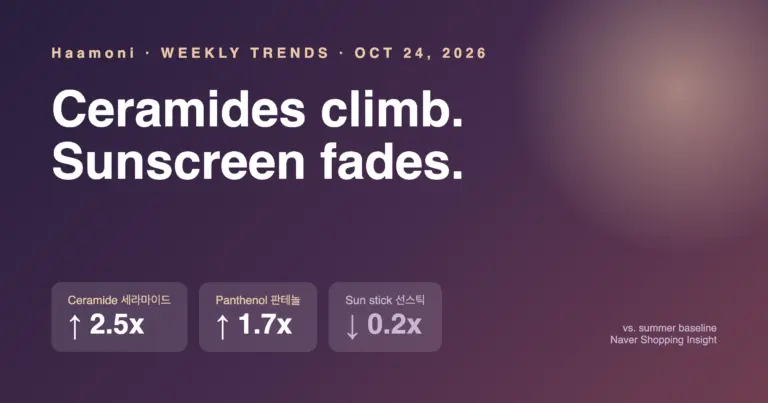
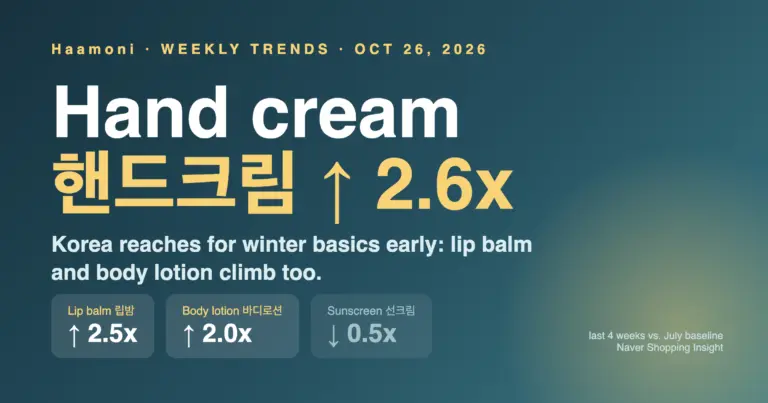
In Naver Shopping Insight, clicks on panthenol (판테놀) in the beauty category rose about 47% over the last four full weeks. That compares with the four weeks before. I left out the current unfinished week.
The weekly peak came in the week of October 5, so the trend has cooled a little since. It is also a smaller keyword than the big ones. Its interest level is roughly a quarter of “serum”, which I use as my reference keyword.
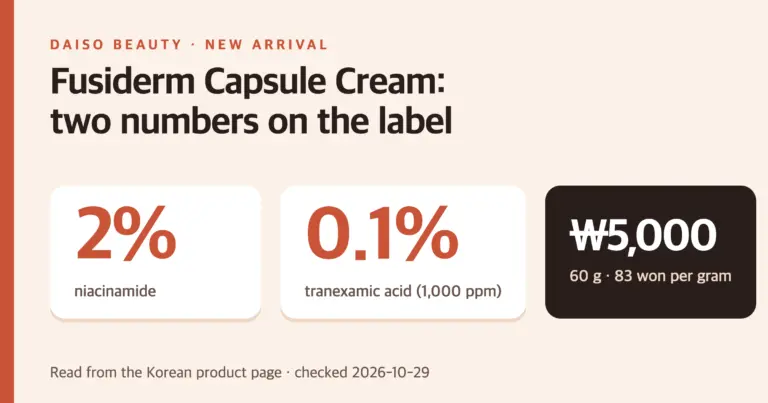
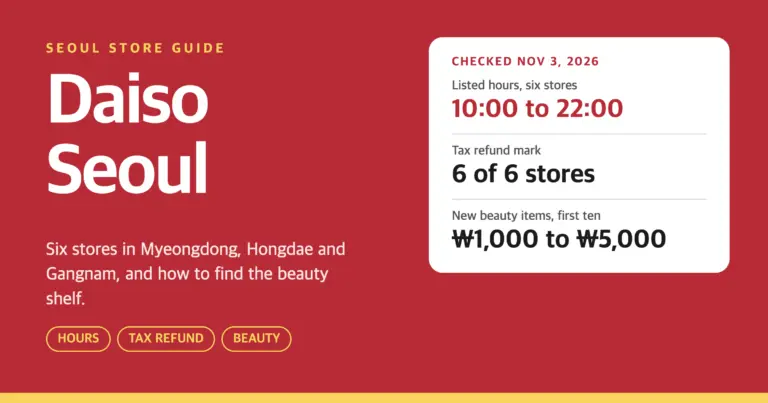
The timing fits what I saw elsewhere. Cold, dry weather pushes people toward barrier creams, and I found two new 5% panthenol creams at Daiso this month. That is a guess about the cause, not something the data proves.
What the evidence says about panthenol skincare
Most of the research is on dexpanthenol, the D-form, in creams, emulsions and ointments. These are the sources I opened.
- A 2002 review in the American Journal of Clinical Dermatology pulled together animal, lab and human studies. It reports that topical dexpanthenol improved skin hydration and reduced water loss through the skin. Double-blind trials also found faster repair of damaged skin than the plain base. The authors describe it as usually well tolerated.
- A 2017 review in the Journal of Dermatological Treatment covers the same ground 15 years later. It says the exact mechanism has not been fully worked out. It suggests panthenol makes barrier molecules in the outer skin layer more mobile.
- A 2020 review looked at small wounds after procedures such as laser treatment. It concluded that early topical use was supported by lab and clinical studies.
- A 2022 review on atopic dermatitis concluded dexpanthenol helped skin barrier function and described a steroid-sparing effect in mild to moderate cases.
Now the caveats. Three of those four reviews have authors affiliated with Bayer, which sells Bepanthen, a well-known dexpanthenol ointment. That does not make them wrong. Still, it is worth knowing.
Also, those studies are mostly about ointments and emulsions made for skin problems. They do not tell you what a few percent of panthenol does inside a toner or a light lotion. I could not find a study that answers that.
For safety, an independent expert panel reviewed panthenol, pantothenic acid and five derivatives. The Cosmetic Ingredient Review panel (2022) concluded they are safe in cosmetics at the concentrations now in use.
Panthenol in Korea vs. other countries
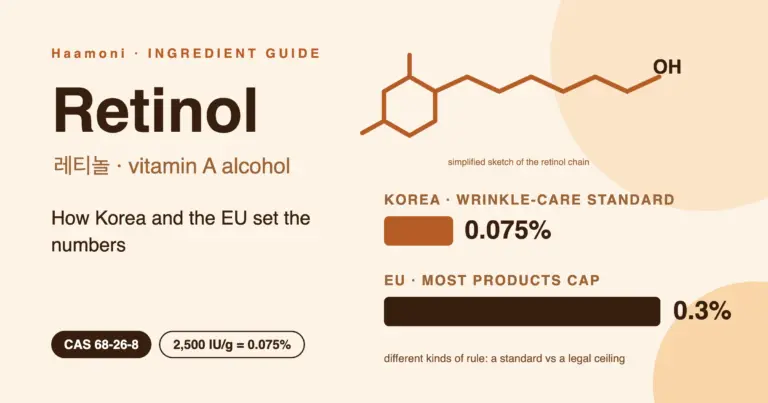
I checked the MFDS restricted-ingredient list and its country regulation list. Panthenol shows up in only one place: Japan sets limits. No country appears on the banned list, and neither Korea nor the EU has a limit entry.
| Market | Panthenol status | Source |
|---|---|---|
| Korea | No ban or limit entry | MFDS restricted and regulation lists |
| EU | Not in any restriction annex; listed as a skin and hair conditioning agent | EU CosIng |
| Japan | Limit: rinse-off products no cap; leave-on 8.0 g per 100 g (DL-form) or 3.0 g per 100 g (D-form) | MFDS regulation data on Japan’s standard |
| Other markets in the MFDS data (US, China, others) | No entry | MFDS restricted list |
Two notes. First, I read the Japanese limits through the MFDS database and could not open Japan’s original text. Second, “no entry” means the database has no record, not that I confirmed a written rule in each country.
There is one practical wrinkle. A 5% cream holds 5 g per 100 g. That fits under the DL-form cap of 8.0 g but sits above the D-form cap of 3.0 g. Labels usually just say “Panthenol”, so I couldn’t tell which form the Daiso creams use. I have not checked whether any of these products are even sold in Japan.
MFDS functional-cosmetic records also include products with 판테놀 in the name, mostly creams, masks and a mist reported between 2015 and 2017. Many carry wrinkle-improvement or brightening claims. The dataset is partial, and I could not tell which ingredient supports each claim. So I would not read this as proof that panthenol itself is a functional ingredient.
Who panthenol suits, and who should be careful
- Dry or tight skin in cold weather is the classic fit, since panthenol is mainly used as a moisturizer.
- Skin that feels easily irritated may do well with it. However, the rest of the formula, such as fragrance, matters as much.
- Oily skin can use it too. Look for a gel or lotion texture, because many panthenol creams are rich.
- Allergy is uncommon but real. A 2025 review in the journal Dermatitis reports that positive patch tests have risen from 0.2 to 0.7% to about 1.2% in recent years. Several of the reported cases involved products marketed as hypoallergenic.
- If you have eczema, a wound, or you are pregnant, check with a dermatologist before relying on any cream.
What panthenol looks like in Korean products
In the products I’ve compared for this blog, panthenol mostly sits in creams and balms. That is where the label can get specific. The two Daiso creams I compared both print 50,000 ppm, which is 5%, and my La Roche-Posay Cicaplast breakdown shows panthenol sitting sixth on the list. The MFDS records also show it in sheet masks and mists. These are product types, not a ranking of what to buy.
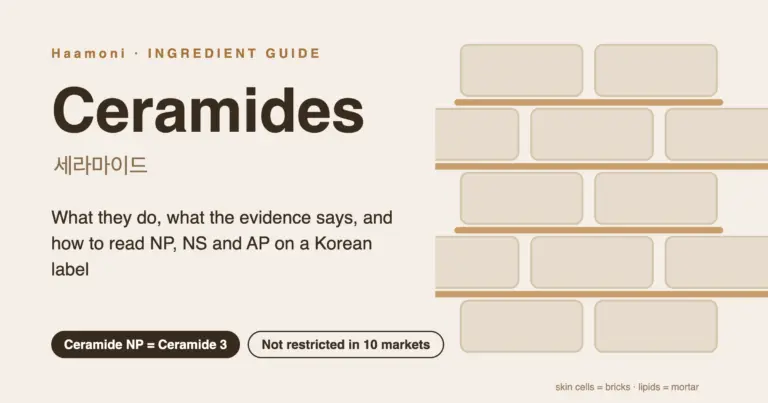
To read a label, find Panthenol (판테놀) on the ingredient list. Then look for a printed amount. Near the top, after water and a humectant such as glycerin, usually means a real dose. If you want the same logic for a different barrier ingredient, I wrote one on ceramides.
Haamoni product posts that look at panthenol
- Make P:rem Safe Me Cleansing Milk Review: Do You Need a Second Cleanse?
- Daiso Blanc Doux Skin Glow Lotion Review: Is It Good for Oily Skin?
- Innisfree Retinol Cica All-in-One Review: Worth It, or Buy the Ampoule?
- Pro-Calm Retinoate Cream Review: Korea’s New Pharmacy Retinoid, Explained
- Abib Heartleaf Essence Pad Review: Why Pay 56% More on Olive Young Global?
- Daiso Fusiderm Capsule Cream Review: Brightening Actives for 5,000 Won?
- Torriden Dive-In Soothing Cream Price: Why Korea Beats Olive Young Global
- Medipeel Mooltox Serum Review: How Much Copper Peptide Is Really Inside?
- Jumiso D-Panthenol Cleansing Milk Ingredients and the Sunscreen Question
- Daiso Panthenol Cream Compared: Dermafirm NAD+ or Dermapuramin Rx?
- La Roche-Posay Cicaplast Balm B5+ Review: Can Oily Skin Use It?
The short version
Panthenol is the alcohol form of vitamin B5, studied mostly in dexpanthenol ointments for dry or damaged skin, and an expert panel found it safe at current cosmetic levels. In Korea’s regulatory database only Japan sets limits, and contact allergy is uncommon but possible.
Some links on Haamoni may be affiliate links. If you buy through one, I may earn a small commission at no extra cost to you. As an Amazon Associate I earn from qualifying purchases. This post is not medical advice.
Sources
- MFDS cosmetic ingredient database (data.go.kr)
- MFDS restricted cosmetic ingredients by country (data.go.kr)
- MFDS cosmetic ingredient regulation list (data.go.kr)
- MFDS functional cosmetics report data (data.go.kr)
- EU CosIng: Panthenol
- Ebner et al., Topical use of dexpanthenol in skin disorders, Am J Clin Dermatol 2002 (PubMed)
- Proksch and de Bony, Topical use of dexpanthenol: a 70th anniversary article, J Dermatolog Treat 2017 (PubMed)
- Gorski and Proksch, Dexpanthenol in wound healing after medical and cosmetic interventions, Pharmaceuticals 2020 (PubMed)
- Cho and Kim, Use of dexpanthenol for atopic dermatitis, J Clin Med 2022 (PubMed)
- Weber and Hylwa, Panthenol allergic contact dermatitis, Dermatitis 2025 (PubMed)
- Cosmetic Ingredient Review, Safety assessment of panthenol, pantothenic acid and derivatives, Int J Toxicol 2022 (PubMed)
- Naver DataLab Shopping Insight, beauty category keyword clicks